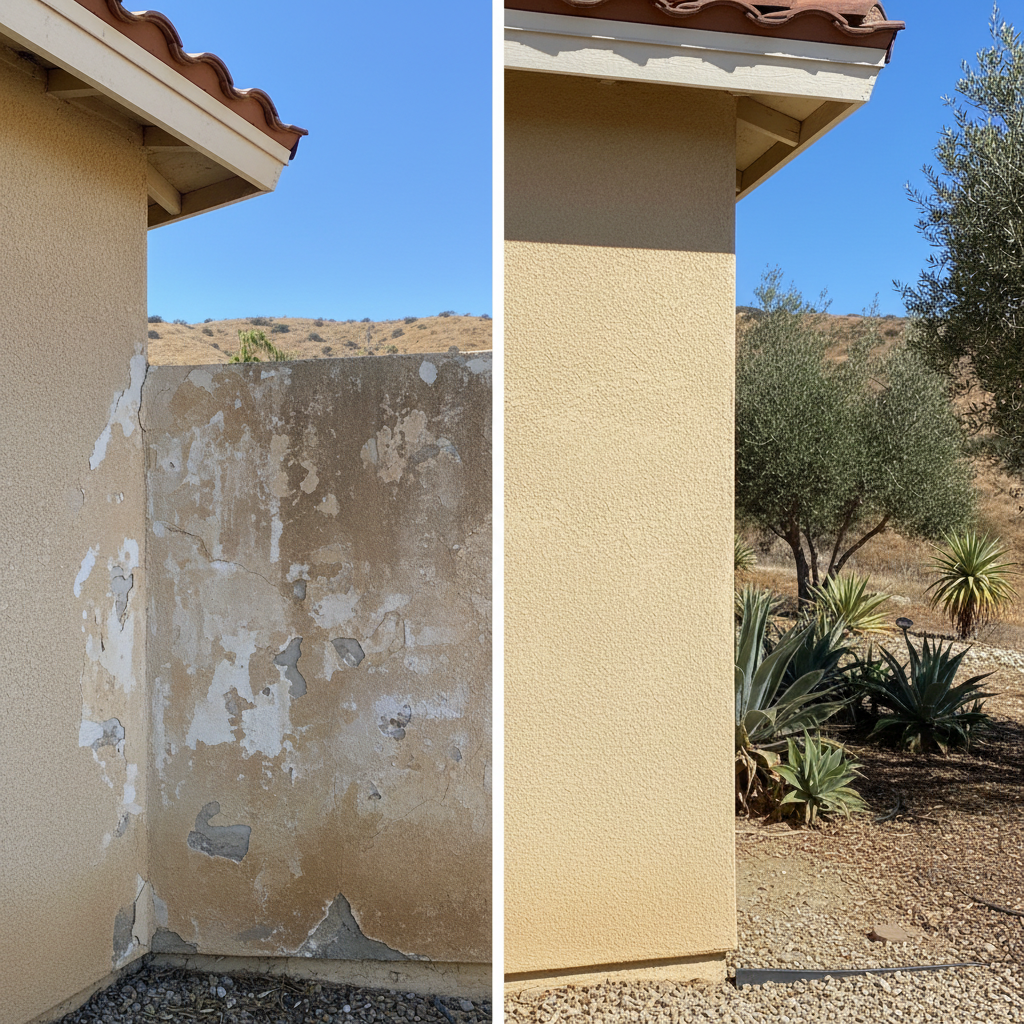
So, you're looking at new stucco for your house, right? Maybe you're building fresh, or it's just time for a big exterior makeover. You've probably heard terms like "traditional stucco" and "one-coat stucco" floating around. What's the real difference between them, and more importantly, which one makes the most sense for your Chula Vista home?
I've been in this business a long time here in Chula Vista. I've seen both systems in action, performing under our specific local conditions. Let's skip the marketing jargon and get right to what you actually need to know.
Traditional 3-Coat Stucco: The Original Method
This is the classic. When folks talk about "stucco," they're usually thinking of this system. It's a multi-layer approach that's been around for ages, and for good reason. Here's how it generally works:
- Scratch Coat: This first layer goes over your lath (that's the wire mesh). It's rough, designed to really grip the next layer.
- Brown Coat: A thicker, leveling coat that smooths things out over the scratch coat. This is where we make sure your walls are nice and straight.
- Finish Coat: The final, decorative layer. This is what gives you the color and texture you picked.
Each of these coats needs time to dry properly, which means it's a longer process. You're looking at several days, sometimes even a week or more, depending on the weather, between applications. Our warm, dry Chula Vista climate usually helps speed up drying, but you still can't rush it.
Pros of Traditional 3-Coat Stucco:
- Durability: This stuff is incredibly tough. Its thickness means it can take a hit. You won't easily ding or crack it, believe me.
- Breathability: Traditional stucco breathes well. It lets moisture vapor escape, which is super important for stopping mold from growing behind your walls, especially with our occasional humidity.
- Repairability: If it does get damaged, fixing it and blending it in is usually pretty straightforward.
- Time-Tested: We're talking centuries of proven performance. You know exactly what you're getting.
Cons of Traditional 3-Coat Stucco:
- Cost: It's typically more expensive upfront. Why? More labor for multiple applications, plus more material.
- Installation Time: Like I said, it takes longer because of all that drying time between coats.
- Weight: It's heavy. This isn't usually an issue for new builds, but if you're remodeling, you need to make sure your home's framing can handle the extra load.
One-Coat Stucco (or "Synthetic" Stucco): The Newer Option
One-coat stucco systems are made to be faster and often cheaper to put on. They're usually a mix of Portland cement, sand, fibers, and various polymers. Despite the name, it's not always just *one* layer of material; it's often a single, thicker base coat that replaces the scratch and brown coats of traditional stucco, followed by a finish coat.
Sometimes people mix up "one-coat" with EIFS (Exterior Insulation and Finish Systems), but that's a whole different thing entirely, involving foam insulation boards. While one-coat systems *can* include insulation, they're not the same as full EIFS. For most homes in Chula Vista, when we talk one-coat, we mean a cement-based product with fiber reinforcement.
Pros of One-Coat Stucco:
- Cost-Effective: Generally, it costs less to install because it needs less labor and less time on the job site.
- Faster Installation: Fewer coats mean less drying time, so your project gets finished quicker.
- Lighter Weight: It weighs less than traditional stucco. This can be a real plus for certain remodels or specific construction types.
- Flexibility: The polymers in the mix give it a bit more give, which can help prevent small cracks from building movement.
Cons of One-Coat Stucco:
- Durability/Impact Resistance: It's flexible, yes, but typically not as hard or impact-resistant as traditional stucco. A solid hit can cause more serious damage.
- Moisture Management: This is where you really need to be careful. Because it's denser and doesn't breathe as well, proper flashing and waterproofing are absolutely critical. If water gets behind it and can't get out, you're asking for big trouble. This is especially true near the coast, where we get that morning marine layer, isn't it?
- Repair Complexity: Matching the texture and color for repairs can sometimes be trickier than with traditional stucco.
What I Recommend for Chula Vista Homeowners
Alright, so which one should you choose? For most homeowners here in Chula Vista, especially if you're thinking about long-term value, top-notch durability, and fewer worries about moisture down the road, I almost always lean towards traditional 3-coat stucco.
Why? Our climate, while mostly dry, has its little quirks. We get that coastal humidity, and we've got homes built on expansive soils in places like Eastlake, which can cause some minor foundation movement over the decades. The breathability and sheer toughness of traditional stucco just handle these conditions better.
Sure, it costs a bit more upfront, and it takes a little longer. But think of it as an investment. You're getting a thicker, tougher, more forgiving exterior that's proven to last for decades with the right maintenance. You won't be calling Chula Vista Stucco & Plastering for premature repairs, that's for sure.
Now, there are situations where one-coat makes sense. If budget is your absolute top priority and you're confident your home's design and construction are flawless when it comes to flashing and waterproofing, it can be a good option. But you really need to be diligent about its installation and ongoing care.
Ultimately, it's your home and your decision. But if you want something that's going to stand the test of time, look fantastic, and give you real peace of mind, traditional 3-coat stucco is usually the way to go. Give us a call, and we can chat about your specific project and what makes the most sense for your house.