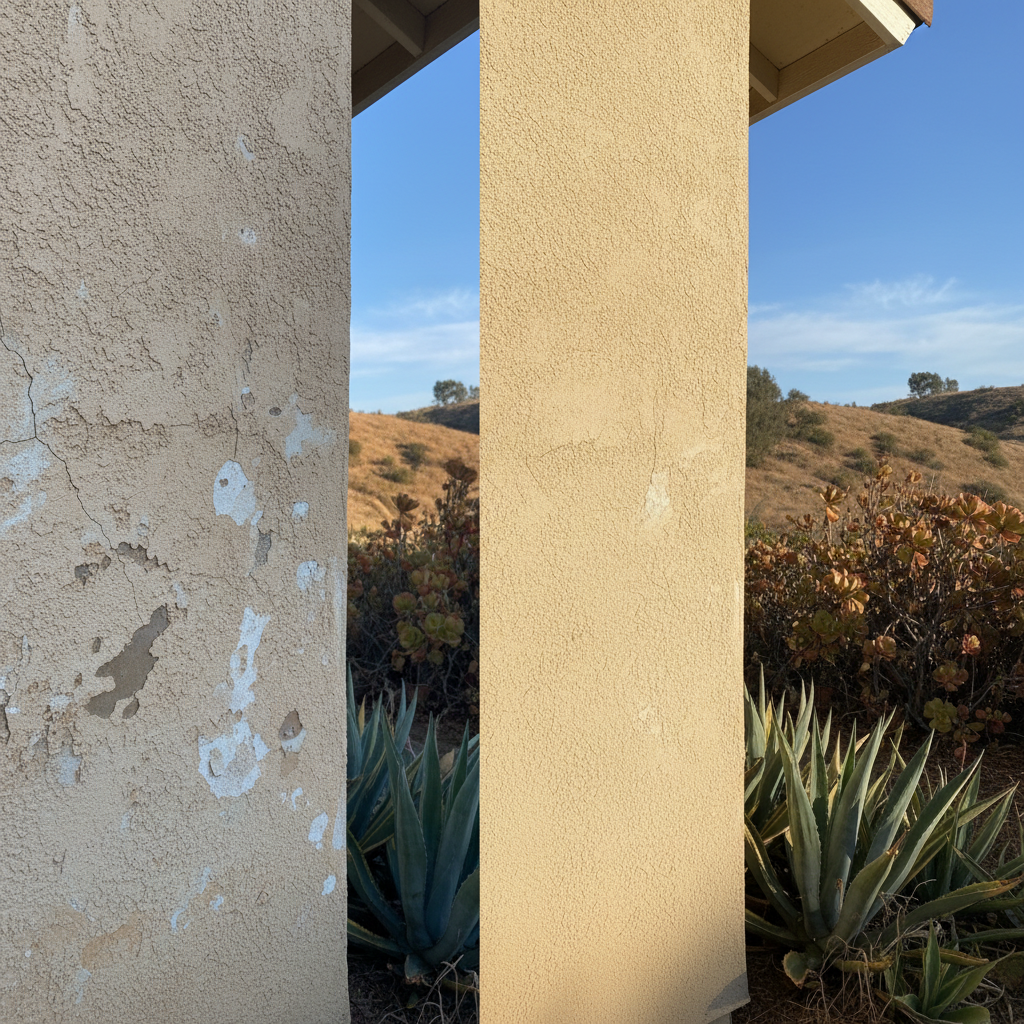
Your stucco's looking a bit rough, huh? Maybe you've got some cracks, a little water stain, or a bigger chunk missing. The first thing that pops into most folks' heads is, 'Can I just patch it?' Or maybe, 'Do I need to re-stucco the whole thing?' It's a common question, and honestly, there's no one-size-fits-all answer. But I can tell you what I've seen work and what doesn't, especially here in Chula Vista.
Patching Stucco: The Quick Fix
Let's talk about patching first. It's usually the cheaper, faster option, and sometimes, it's absolutely the right call. If you've got a small, isolated crack, a ding from a rogue baseball, or a little bit of delamination in one spot, a patch can do the trick. We'll clean out the damaged area, apply new stucco layers to match the existing texture, and then paint it to blend in.
When a Patch Works Best:
- Small, hairline cracks that haven't spread.
- Minor impact damage, like a golf ball hitting the wall.
- Isolated water damage that's been fixed at the source, and the stucco is only damaged in a small area.
- You're on a tight budget and the damage is truly minimal.
The biggest challenge with patching is matching. Stucco ages, fades, and gets dirty. Even if we use the exact same color and texture mix, the new patch might stick out like a sore thumb for a while. It's like trying to patch a faded pair of jeans with brand new denim – you can tell the difference. Sometimes, painting the entire wall or even the whole house after patching is the only way to get a uniform look. And if you've got an older home in, say, the Bonita area with its unique, custom stucco finishes, getting a perfect match can be even harder.
Full Re-Stucco: The Long-Term Solution
Now, what about re-stuccoing the whole house? This is a bigger job, no doubt. It involves either removing the old stucco entirely down to the sheathing or applying new stucco over the existing, depending on the condition and type of current stucco. Then we apply new lath, scratch coat, brown coat, and the finish coat. It's a complete refresh.
When a Full Re-Stucco is Your Best Bet:
- Widespread cracking or spiderwebbing across large sections of your home.
- Extensive water damage, especially if it's led to rot underneath.
- Multiple failed patches that just aren't holding up.
- You're looking to change the color or texture of your home's exterior entirely.
- Your existing stucco is just old, brittle, and showing its age everywhere.
- You want to improve insulation or address moisture issues comprehensively.
A full re-stucco is definitely more expensive upfront. There's more labor, more materials, and it takes longer. But here's the thing: it gives you a brand new, uniform, durable exterior. You're essentially resetting the clock on your home's facade. It'll last for decades if done right, and you won't have to worry about mismatched patches or new cracks popping up next to old ones.
Cost, Durability, Maintenance, and Appearance
Let's break down the practical stuff:
- Cost: Patching is cheaper per square foot, but if you need a lot of patches, the cost can add up and might approach a re-stucco. A full re-stucco is a significant investment, but it's a one-time cost for a long-term solution.
- Durability: A good patch can last, but it's only as strong as the surrounding, older stucco. A full re-stucco gives you a completely new, robust system that's designed to last.
- Maintenance: Patches might need more frequent touch-ups over time, especially if the underlying issues aren't fully resolved. A new stucco system, installed correctly by folks like us at Chula Vista Stucco & Plastering, is pretty low maintenance – just keep it clean and watch for new damage.
- Appearance: This is where re-stuccoing really shines. You get a perfectly uniform, fresh look. Patches, even good ones, often show.
My Recommendation for Chula Vista Homeowners
Given our climate here in Chula Vista – the coastal air, the occasional heavy rains, and the constant sun – stucco takes a beating. I usually tell folks this: if you have a few small, isolated issues and your stucco is otherwise in good shape, a targeted patch is fine. But if you're seeing widespread cracking, multiple areas of damage, or if your stucco is just old and tired, you're usually better off biting the bullet and going for a full re-stucco.
It's an investment, sure, but it protects your home, boosts curb appeal, and frankly, saves you headaches down the road. You won't be chasing new cracks every year or dealing with mismatched colors. It gives you peace of mind knowing your home's exterior is solid for years to come. Give us a call, and we can come out, take a look, and give you an honest assessment of what makes the most sense for your place.